Surrounded by Stories Surreal and Sublime*
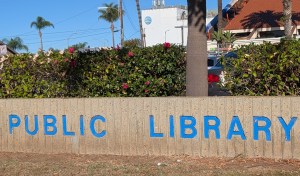 As this is posted, it’s just over 294 years since Benjamin Franklin opened the first public library in what was then the North American colonies. And, of course, public libraries have been around in some form or another for a lot longer than that. Today’s libraries serve many purposes; they’re places where people go to do research, to read and get books, to look for jobs, to post to blogs, and to vote, among many other things. And many libraries have important outreach events to support the community. They’ve become integral parts of society, and if you think about it, they’re forces for equity. Anyone can use a public library. That means that children can do schoolwork and use the Internet regardless of their economic situation or home life. People facing homelessness can use libraries to contact support systems, job-hunt, or just stay warm during winter and cool during the hot summer. With everything libraries do, it’s not surprising that we see them in a lot of crime fiction. Space doesn’t permit me to describe each one, but I’m sure you’ll think of more than I could, anyway.
In Peng Shepard’s The Cartographers, we are introduced to Helen ‘Nell’ Young. She is the daughter of Dr. Daniel Young and Dr. Tamara ‘Tam’ Jasper-Young, both eminent cartographers. In fact, Nell’s become a cartographer herself, and works for a company that makes cheap maps. Her father is Head of the New York Public Library’s Rare Maps department, and Nell had originally planned to take his place when he retired. But a rift between them has changed that plan, and Nell hasn’t even spoken to her father since they parted ways. One day, Daniel Young is murdered in his office at the library, and the police begin an investigation. As you can imagine, the police want to talk to Nell. She goes to her father’s office and finds an old cheap street map – the kind service stations used to have. She’s not sure why he would have a map like that among the very rare and valuable maps he curates, and that inspires her to start asking questions. It turns out that this murder is linked to the past, and to a very unusual old mystery. Throughout the novel, we get a sense of the public library and the many kinds of materials that are available.
Lilian Jackson Braun’s Cat Who… mysteries feature James ‘Qwill’ Qwilleran, a former Chicago journalist who now lives in a town called Pickax, in rural Moose County, ‘400 miles north of nowhere.’ Just because it’s a small community doesn’t mean it lacks a good library. In fact, the library is one of the ‘watering holes’ for residents. One resident, Homer Tibbett, is a local historian who spends quite a lot of time in the library reading up on his topics of interest. His expertise turns out to be useful more than once in the series. And the head librarian, Polly Duncan, is Qwill’s love interest for most of the series. As he’s a bibliophile himself, he spends his share of time at the library, and as the series goes on, we see what an important role it plays in the town.
In Christie Poulson’s Murder is Academic (AKA Dead Letters), we meet Cassandra James, who teaches in the English Literature Department at St. Etheldreda’s College, Cambridge. One day, she visits the home of Margaret Joplin, who heads the department, to pick up some student exam papers. What she finds instead is Margaret’s body in the swimming pool. At first, it looks like a terrible accident. Soon enough, though, it looks as though it could have been murder. One part of the trail leads to the past, so Cassandra makes use of Cambridge’s library to find the answers she needs. As she does, we see how important libraries are in storing information in digital and other formats.
One of the other ways in which libraries serve communities is by making books available even to those who live remotely, or who can’t easily get to the library. That’s why libraries offer bookmobiles and other mobile options. We see this in Ian Sansom’s Mobile Library mysteries, beginning with The Case of the Missing Books. The books feature Israel Armstrong, who moved from North London to Tumdrum, Ireland. He’d thought he would be taking on the responsibility for the local library, as a sort of stepping-stone to a high-level library curating position. Instead, he finds that he’s expected to drive the mobile library bus around the district, including the more remote areas. At first, he resents everything about his new job. But as time goes by, he adjusts to life in Tumdrum, and he sees the value of making books available to residents who might not be able to access books otherwise. What’s more, he learns that there are book lovers all over, not just in urban and suburban areas.
There’s also Sulari Gentill’s The Woman in the Library. Hannah Tigone is a famous author who’s currently writing a novel that features Winifred ‘Freddie’ Kincaid, who is also a writer. In Hannah’s novel, Freddie and her friends Marigold Anastas, Whit Metters, and Cain McLeod, meet up regularly to help each other write and to support each other. Freddie’s novel actually includes these characters, although they’re given different names. One day, the group is in the Boston Public Library, where they spend a lot of time, when they hear a scream. It turns out that a woman called Caroline Palfrey has been murdered. In the novel Hannah is writing, Freddie and her group start asking questions about the murder, but Freddie soon finds that nothing is as it seems, and there are things she doesn’t know about the group members. In the meantime, Hannah sends her chapters to a friend, Leo Johnson, and gets his feedback. Leo also becomes a character in her book. It’s an interesting meta novel of an author writing about an author who’s writing about other authors, and the Boston Public Library is an important character, if you will, in the story.
There are several series, too, that feature libraries and librarians as main settings and characters. And that’s the thing about public libraries. They’re vital to the community, and they serve many purposes. Whether you want to read, look for work, send out emails, post to a blog, or find a safe place to take children for a good experience, libraries are there. Little wonder we see them so often in crime fiction.
*NOTE: The title of this post is a line from Jimmy Buffett’s Love in the Library.
 Crime Writer Margot Kinberg