Her Body Tanned and Wet Down at the Reservoir*
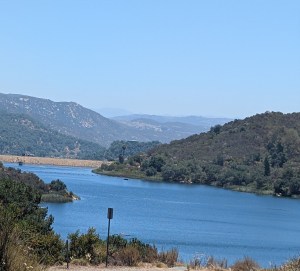 A recent interesting post from Moira at Clothes in Books has got me thinking about reservoirs. Many communities depend on them, and of course, some communities have been drowned to create them. They can serve as gathering places, picnic sites, and more. And they can serve as interesting settings in crime fiction. Here are just a few examples.
In Michael Connelly’s The Overlook, Harry Bosch and his new partner Ignacio ‘Iggy’ Ferras investigate the murder of physicist Stanley Kent. The victim’s body was found on an overlook of Hollywood’s Mullholland Drive, right above a local reservoir. It’s a very urgent case, too, because Kent’s murder may be connected to the theft of some radioactive material from a cancer clinic. What’s more, that theft may be connected to a group of terrorists. The case is enough of a national emergency that the FBI gets involved, so Bosch also works with FBI agent Rachel Walling. There is a witness to the murder, a young man who was trying to sneak onto the property of superstar entertainer Madonna. He’s reluctant to get involved, but Bosch persuades him, as only Bosch can, to co-operate with the police. It turns out to be a much farther-reaching case than it seems on the surface.
Donald Westlake’s Drowned Hopes features his protagonist, professional thief John Dortmunder. In the novel, Dortmunder has just come back from an unsuccessful burglary attempt. He’s surprised to find an ex-cellmate, Tom Jimson, waiting for him. It seems that Jimson’s recently been released from prison and wants Dortmunder’s help. When Jimson went to prison, he left behind a stash of US$700,000, buried in a small New York town. Later, that town was flooded to build a reservoir. Now, Jimson wants to blow up the reservoir dam, drain the town, and get his money. Dormunder doesn’t object to helping get the money. However, blowing up the reservoir dam will mean the end of several local communities. So, Dortmunder and his motley crew will have to think of another way to get to the money.
David Duchovny (yes, that David Duchovny)’s The Reservoir isn’t per se a crime story. But it features some interesting dark undercurrents. The protagonist is a middle-aged man called Ridley, who has an upmarket apartment right over the reservoir for New York’s Central Park. He’s a former Wall Street trader who took a buyout and an early retirement. Then came the pandemic, which has isolated everyone, including Ridley. The enforced solitude begins to impact Ridley’s mind, as he reflects on his life, his choices, and what might happen if he contracts COVID. To occupy his mind, he dabbles in time-lapse video of the view outside his window, and one night, he sees what looks like lights flashing from across the park in a sort of Morse Code. Is someone trying to communicate? If so, how does that person know Ridley? The mystery nags at him, despite the restrictions he faces because of the pandemic. He answers the flashing lights in an attempt to communicate with whoever it is and gets drawn into some dangerous trips into the park. Among other things, his novella explores how our psychology is impacted by isolation.
J.B. Turner’s Long Way Home is the follow-up to No Way Back and picks up three years after the events in that novel. NYPD Detective Jack McNeal still grieves the loss of his wife, Caroline (the story of her death is outlined in No Way Back). He thought he had put the murder behind him when he threw her killer into the reservoir. But now, that person’s body has been discovered, and Jack faces pressure from everywhere. The police are likely to link him to the body. The victim’s employers are after him, too. And he’s still looking to stop ‘Woodcutter’ – the organization that’s behind much of what Jack is enduring, and that has now targeted his family and friends. Jack’s going to have to work fast and try to keep his sanity intact if he’s to stop the organization.
There’s also Suzanne Chazin’s Land of Careful Shadows. In it, we are introduced to police detective Jimmy Vega, who works in the Lake Holly, New York, police department. One day, the body of a young woman is pulled from the local reservoir. She is identified as Maria Elena Vazquez-Herrera. However, it comes out that that wasn’t her real name. It also comes out that she had a daughter. Now, Vega is faced with two challenges. One is finding out who Maria Elena really was, where she was from, and who killed her. The other is finding out what happened to her daughter. It’s a difficult case, and it doesn’t help that Vega has to deal with, among other things, his own experience as a Hispanic cop, as well as the anti-immigration sentiment he runs into as he works the case.
Reservoirs may seem peaceful, and they make a big difference in a lot of lives. But safe? Not really. Not in crime fiction. Thanks, Moira, for the inspiration. Now, folks, treat yourselves to a visit to Moira’s blog. Interesting, well-written reviews await you, as does terrific commentary on clothes, culture, and what it all says about us.
*NOTE: The title of this post is a line from Bruce Springsteen’s The River.
 Crime Writer Margot Kinberg