Will You Stand Up and Take Your Chance?
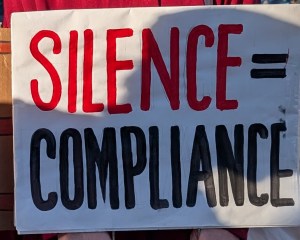 What does it mean to be brave? Bravery can look different in different situations, and people define it in different ways. But most people think of bravery as doing the right thing, even if it’s difficult – in some cases, even if it could cost one’s life. History shows us all sorts of examples of bravery (e.g. those who rescued and sheltered Jewish people during the Holocaust, or those who’ve risked everything to report on something a government is doing). Bravery isn’t always easy to capture in one definition, but we usually know it when we see it. And there’s bravery both in real life and in crime fiction.
For example, William Ryan’s Captain Alexei Korolev is a member of the Moscow CID during the last years before World War II. At that time, Stalin is firmly in control of the government, and no-one dares to cross him. He and the Party dominate life in the then-Soviet Union, and anyone who crosses him is in mortal danger. Against this backdrop, Korolev is expected to investigate crime (because the Moscow police are expected to keep the city safe), but also support the belief that in a worker’s paradise, there is no crime. That in itself is enough of a challenge. Add to that the power of the Party, and it’s not hard to see how doing his job requires Korolev to be brave. More than once in this series, he risks his life by investigating supposedly ‘untouchable’ Party members.
Fans of Qiu Xiaolong’s Inspector Chen Cao will know that he’s in a similar situation. He lives and works in late-90s Shanghai, where the Party controls just about everything, including a lot of what the police do. Chen’s expected to do his job (i.e. keep the streets safe) without embarrassing the Party or the country. He sometimes has to work very quietly and at grave risk to solve cases. And it has cost him. Still, Chen is a police detective whose job it is to find the truth about a crime, no matter where that truth leads him.
In Paddy Richardson’s Swimming in the Dark, we meet Ilse Klein and her mother Gerda. During the 1980’s, at the height of the Cold War, the Klein family escaped from East Germany and found their way to New Zealand. They weren’t able to do that alone; instead, they had help from several brave people who helped them get across the border and on their way. The Kleins, too, had to be brave. They had to look and act nondescript and to play their parts naturally, despite the fear they had of what would happen if they were caught. Years later, Ilse is a secondary school teacher who ends up being drawn into a mystery when one of her most promising students, Serena Freeman, disengages from her education and then goes missing. As that plot line plays out, we see that the Kleins have not lost their capacity to be brave.
Ernesto Mallo wrote two novels featuring Buenos Aires police detective Venancio ‘Perro’ Lascano. It’s the late 1970’s, a time when a right-wing junta runs the government, and anyone who disagrees could be ‘disappeared.’ Lascano is a good cop who follows the trail of the cases he investigates, no matter where they lead. He’s not stupid, though; he knows very well what the consequences of taking on the government will be. So, he works very quietly, and only with people he trusts. And those people have to be as brave as he is. For instance, the local medical examiner, Fusili, takes great risks to secretly provide Lescano with accurate information, even as there’s pressure to make those reports look the way the government wants them to look. There are other real acts of bravery, too, in the books.
In David Whish-Wilson’s Line of Sight, we meet Frank Swann, a member of the Perth police. He took the brave decision to request a Royal Commission to investigate the ‘Purple Circle,’ a group of corrupt police officers. The backlash forced him to leave Perth for a time, but he returned when he heard of the death of a friend of his. As he tries to find out the truth, he’s up against several odds. For one thing, his colleagues won’t support him; he’s a ‘dead man walking.’ For another, the murderer has no intention of being caught and will do whatever it takes to keep the truth from coming out. And the truth leads to high places. Swann has to use every bit of bravery to find the killer while dealing with the fallout from the corruption investigation. So do the few people who are willing to talk to him and help him.
Dave Butler’s Full Curl introduces Jenny Willson, a game warden stationed in Canada’s Banff National Park. When she becomes aware of a rash of poaching in the park, she is determined to protect the land and animals, as she is supposed to do. So, she prepares to find out who the poachers are. It turns out that this is part of a larger poaching operation that includes people who are wealthy and well placed. They’re not afraid to do whatever it takes to protect themselves. To speak out against those people is risky, and Jenny knows that she could be in danger. Still, she persists in her investigation, and in the end, finds out the truth.
Some bravery is smaller in scope, but no less important for that. For instance, in Belinda Bauer’s Blacklands, we are introduced to twelve-year-old Stephen Lamb. He lives with his mother, grandmother, and brother in a small Exmoor town. It’s not a happy, healthy family, though. Years earlier, Stephen’s Uncle Billy (his mother’s brother) went missing and was presumed murdered by a man called Arnold Avery. The family has never really healed from this tragedy, and Stephen wants to bring his family some peace. So, he decides to write to Avery, who’s now in prison on other charges, and ask him where Uncle Billy is buried. Avery responds, and before long, the two are involved in a dangerous game of cat and mouse. Stephen takes risks to try to help his family, and although it’s not a world-shaking event, it means he has to have courage.
There are many, many other examples of bravery in crime fiction; I’m sure you could name far more than I could. Characters who show courage can add much to a story, especially when the author acknowledges that bravery doesn’t mean one’s not afraid. It means overcoming that fear. Which brave characters have stayed with you?
*NOTE: The title of this post is a line from Claude Michel Schönberg and Herbert Kretzmer’s Do You Hear the People Sing.
 Crime Writer Margot Kinberg