And I’ll Do Anything to Win*
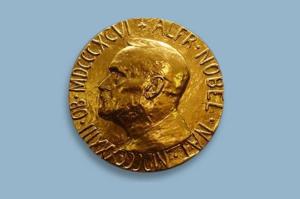 When there’s a valuable prize at stake, some people will do just about anything to win it. It’s not surprising that someone would want to be a winner; that’s a pretty natural desire. But sometimes, that push to win can lead to some very dark places – including murder. There are certainly examples of people who are desperate to win in real life. They’re there in crime fiction, too.
In Gerald Elias’ The Devil’s Trill, it’s 1983 in New York City. The Musical Arts Project group is sponsoring a Carnegie Hall recital for nine-year-old Kamryn Vander, who’s won the group’s Holbrooke Grimsley International Violin competition. That competition is fierce, and very high-stakes. Not only does Kamryn get her own recital at Carnegie Hall, but she also gets the privilege of using a priceless 18th Century Stradivarius violin for the event. It’s a unique violin because it’s three-quarters the size of a standard violin. But just before the recital begins, someone steals the Stradivarius. The insurance company that covers the violin naturally wants it found, so they’ve hired former musician Nathaniel Williams to find out. He, in turn, asks Daniel ‘Jack’ Jacobus for help. He and Jack are former musical colleagues who’ve kept their friendship, and Williams was at Carnegie Hall the night of the concert. So, he might be very helpful. The two start working together to find out the truth. Then, there’s a murder that implicates Jack. Now, he and Wiliams will have to work quickly to clear his name. The trail leads to Japan and back, and we learn about the cutthroat world of some musical competitions.
Teresa Solana’s A Shortcut to Paradise begins on the night of a prestigious award banquet in Barcelona. At the event, the Golden Apple Fiction Prize will be awarded to acclaimed writer Marina Dolç. It’s a noteworthy prize, and there’s naturally been competition for it. So, Marina is delighted that she has won. Not long after she leaves the banquet, though, she is found dead in her hotel room. Suspicion understandably falls on the victim’s rival, Amadou Cabestany, who was a finalist for the award. He claims he’s innocent, though, although he had a good motive. Cabestany’s agent wants his name cleared and hires PI brothers Eduard Martínez and Borja ‘Pep’ Masdeu to investigate the murder. They begin the investigation, and they soon find that more than one person had a reason to want Marina Dolç dead.
Paul Pilkington’s Long Gone is the story of Natalie Long. She’s been invited to a weekend group interview event at a successful publicity company called Brand New. Part of the weekend involves sit-down interviews with various members of the company. But there are also competitive events, such as creating a slogan and campaign for a client. There’s a group of candidates at the event, but only one will be offered the highly sought-after job. That’s the prize. When Natalie doesn’t return after the weekend, her roommate, Amy Cullen, gets concerned. So, she asks her father, Detective Chief Inspector (DCI) Paul Cullen, to find out whatever he can. He’s not sure what he can do, as he’s part of the British Transport Police, and doesn’t have jurisdiction in other places. Still, he agrees to do what he can. What he uncovers shows just how obsessed people can get about winning a competition.
Swati Kaushal’s Lethal Spice features Superintendent of Police Niki Marawh, who lives and works in Shimla, Himachal Pradesh. As the novel opens, the hit reality show Hot Chef, with its host Rajat Tripathi, is filming an episode at the Gaiety Theatre. Six chefs are competing to be the winning chef, and three judges will decide on the winner. As the show is going on, people begin collapsing, and a gas attack alert is given. Niki and her team are called to the scene, and it looks as though this might be a terrorist attack. It’s not, though. Instead, when everything is cleared up, one of the judges, Mala Joseph, is found dead. It’s not an easy case, and as you can imagine, the contestants are all people of interest, since they all very much want the prize for winning.
There’s also David Earth’s By-Catch. In it, we meet sometimes-fishing guide Shamus Pickford, who lives on Florida’s Gulf Coast. As the story begins, the area is getting ready for a major fishing tournament. One night, Shamus is helping his friend Cliff Fleming cater a pre-tournament event when he overhears people plotting to cheat in the event. Shamus’ sense of fair play is offended, so he decides to see if there’s actually going to be cheating. He and Cliff take a boat out, ostensibly to participate, but mostly to monitor. Sure enough, when the fish are brought in and weighed, Shamus catches the cheating on video. It doesn’t take long to find out who’s responsible, but it’s not going to be easy to catch that person. The cheating may have ties to higher places than Shamus imagined. And he learns that things are not as simple as they seem. Among other things, the story shows the lengths people may go to when they covet a particular prize.
And that’s the thing about prizes. Wanting one is natural enough. But that can be taken too far and have all sorts of consequences.
ps The photo is of the Nobel Peace Prize. Thanks, United Nations!
*NOTE: The title of this post is a line from Zack Young’s Anything to Win.
 Crime Writer Margot Kinberg