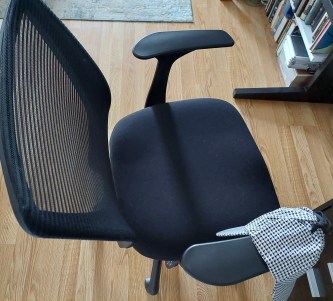
 When most people think of crime fiction, they think of stories where there’s a crime (usually, but not always, murder) and a sleuth who finds out who the criminal is. But there are crime stories that don’t really have sleuths, either professional or amateur. They have protagonists, but those protagonists aren’t sleuths. It’s not easy to create that sort of story, but when it’s done well, a story without a sleuth can engage the reader in a different way, and can be suspenseful.
For instance, in Karin Alvtegen’s Betrayal, we are introduced to Eva Wirenström-Berg and her husband Henrik. They’ve been together for fifteen years and are parents to six-year-old Axel. On the surface, they seem like a stable, happy couple, and Eva has always assumed they were. Then, to her shock, she discovers that Henrik has been unfaithful. Eva is determined to find out who the other woman is, and when she discovers that, she makes her own plans. Along the way, her path crosses that of Jonas Hansson, who has his own tragic past. His fiancée Anna was badly injured after a fall from a pier at a local dock and is now in a coma. The meeting between Eva and Jonas will have unexpected and tragic consequences for both of them. There are crimes in this novel, but it’s not the sort of novel where a sleuth finds out the truth.
As Steph Avery’s Our Trespasses begins, the police receive an anonymous confession to the murder of a man whose body has been found in one of London’s Underground stations. But in this case, the police don’t really investigate; they’re a presence, briefly, but are not sleuths. The story then shifts to 1966 South London, a time of Mods, Rockers, music, and experimentation. Teenage sisters Madeline ‘Midge’ and Bridget ‘Bridie’ Dolan are eager to be a part of it all. They love the fashion, the music, and the culture. One Friday, they finally get their mother’s permission to go dancing at the Palais Royale. The only condition is that their cousin Jimmy must take the girls and then pick them up later. Midge and Bridie agree, and they go off to the palais. The evening starts off well enough, but ends up in tragedy, and has lifelong consequences for everyone involved. In this novel the story unfolds bit by bit, and mostly through the eyes of the main characters. There isn’t a sleuth who finds it all out.
In Martin Clark’s The Legal Limit, brothers Gates and Mason Hunt have had different responses to an abusive childhood. Gates has squandered his athletic ability (which could have gotten him college scholarships) and is living on his girlfriend’s Welfare payments and on money he’s gotten from his mother. Mason, on the other hand, has taken advantage of every opportunity to come his way, and has gotten a scholarship to law school. One day, Gates has an argument with a romantic rival, Wade Thompson. The argument dies down, but it flares up again when the Hunt brothers encounter Thompson later that night. All too quickly, Gates shoots Thompson. Out of loyalty, Mason helps his brother cover up the crime. It comes back to haunt him years later, though, when Gates is arrested for drug trafficking. He begs Mason to help him get out of prison, but Mason refuses. Gates threatens to implicate his brother in the still-unsolved Tompson murder, and Mason calls his bluff. Mason soon finds himself heading for trial on a murder charge, and he’ll have to think of a way to clear his name. We learn the whole story of the murder and how Mason deals with his indictment, but the novel doesn’t have a sleuth who finds out what’s happened.
There’s also not really a sleuth in Zoran Drvenkar’s You. The story begins as a major snowstorm strands motorists on the road from Bad Hersfeld and Eisenach. A man called the Traveler goes from car to car committing murder. By the time he’s done, twenty-six people are dead and he’s made a clean getaway. As the story goes on, we learn more about him and his motivations. Also in the story, we meet four teenage friends: Sunmi ‘Schnappi’ Mehlau, Ruth Wassermann, Isabell ‘Stink’ Kramer, and Vanessa ‘Nessi’ Altenburg. They’re concerned about Taja, the fifth member of their group, who’s not seemed to be doing well, and decide to visit her at home and see what’s wrong and how they can help. Their stories end up intersecting with the Traveler’s story and another plot thread, and we learn the truth about the different characters. It’s a noir story with no real heroes and no sleuth who uncovers clues and solves a case.
And then there’s Blair Denholm’s Sold, the story of Gary ‘Gazza’ Braswell. As the novel begins, he sells cars at a very upmarket dealership in Australia’s Gold Coast. Unfortunately, he borrows money from an illegal bookmaker named Duncan ‘Jocko’ Mackenzie. He’s not sure how he’s going to pay it back, but he knows full well what will happen to him if he doesn’t. When a Russian developer buys two expensive cars from Braswell, he thinks his problems are solved, since he can now pay his debt. But Mackenzie has added another condition. Braswell must take a trip to Bali with a load of drugs and bring back the money he’ll receive at the other end. Braswell doesn’t want to do the job, but Mackenzie makes it clear that Braswell’s wife Maddie will be the one to suffer if he doesn’t. As the time for the trip gets nearer, Braswell faces pressure from Mackenzie and from the Russian developer, who wants him to work selling houses and sharing the profits. He comes up with a plan to outwit both, but the plan has almost more chance of failing than of succeeding. Meanwhile, the Australian Federal Police are taking an interest in his financial connections with the Russians. If Braswell is to get out of this mess, his plan will have to work. It’s a sometimes-gritty, dark-wit, noirish sort of story, but there’s not really a sleuth in it.
There are other stories, too, in which there are crimes (so you can call them crime fiction), but not sleuths. Many short stories are like that (too many for me to list here). That sort of plot can work if it’s done well, but it takes skill. Which stories like that have stayed with you?
*NOTE: The title of this post is a line from Billy Joel’s The Great Wall of China
 Crime Writer Margot Kinberg
Good point, and it seems to be especially true for short stories.
LikeLike
Thanks, Becky. And you know, I hadn’t thought about short stories. You have a point that there are plenty without sleuths…
LikeLiked by 1 person
The one that springs to mind that I’ve read is Then She Was Gone by Lisa Jewel. A woman’s teenage daughter disappears, ten years later she gets in with a man… meets his ten year old daughter who is the spitting image of her lost teenager. That one was quite a ride! And possibly The Pact by Sharon Bolton? Which reminded me a bit of A Fatal Inversion by Barbara Vine but I can’t remember whether that has an actual detective in it.
LikeLike
I’m really glad you reminded me of A Fatal Inversion, Cath. Vine/Ruth Rendell wrote several stories that don’t really include a sleuth. The one that really stays with me is Judgement in Stone. That tells the story of the deaths of the Coverdale family – a classic of suspense, in my opinion – but doesn’t include a sleuth. Thanks for mentioning Lisa Jewel, too – must catch up with her work!! And good memory about The Pact. It is indeed a Sharon Bolton novel!
LikeLike
That’s an interesting angle, Margot – a book can definitely be a mystery without a sleuth, and can be more intresting because of that!
LikeLike
Thanks, KBR! I’ve always thought you could have a well-written crime story without a sleuth, too. It can be tricky, but when it’s done well, it can be very effective!
LikeLiked by 1 person
I like stories like this. Especially if they’re written well. I’m reminded of The Silent Patient. It doesn’t really have a sleuth in it, though it seems like the protagonist is an amateur sleuth/concerned psychiatrist of sorts, before the shocking turn of events in the end.
LikeLike
I know what you mean, OP. When the story is well constructed, the reader learns the history of the characters, etc., without there needing to be a sleuth, and that can work. The Silent Patient is an interesting example, too, of the way a story can unfold in an increasingly tense way. Thanks for mentioning it.
LikeLiked by 1 person
Would Christie’s And Then There Were None fit in here?
LikeLike
Oh, I think it definitely would, Neeru. As the story unfolds, there’s no sleuth. It’s just the group of people on island. The police don’t really play a major role in the story.
LikeLike
Thanks for the interesting post. It prompted me that none of the Saskatchewan authors of crime fiction I have read have a police officer as the sleuth. They are not sleuthless books but have an investigator. Whether it is Gail Bowen (Joanne Kilbourn is a university professor) or Anthony Bidulka (Russell Quant is a former police officer turned private detective) or Nelson Brunanski (Bart Bartkowski is a fly-in fishing camp operator) or my most recent Saskatchewan author, Joanne Jackson (Liz and Rose Murphy are 13 and 11 respectively) none have a police officer solving the case.
Might that be a Holmes style hat hanging on the edge of your chair? Good Lord, has Sherlock come to visit you in California?
LikeLike
You’re right, Bill, about those Saskatchewan authors. They have in common that their sleuths are not police officers. And you’re reminding me that Alan Bradley’s Flavia de Luce stories don’t have a police officer as the sleuth, either. Thanks for mentioning Joanne Jackson’s work. I enjoyed your review of A Snake in the Raspberry Patch very much. I think I have a new author to look up!
And you’re absolutely right; that is a deerstalker hat. But you’ll notice that Holmes isn’t there. There’s no sleuth in that chair…
LikeLike
Fascinating examples Margo, I am trying to think if I’ve read anything like these. I don’t think so, but I am minded to take the plunge as soon as I find I need a change of reading material. Thanks. Tweeted.
LikeLike
Thanks, Jane, and thanks for tweeting! It’s interesting how so many people think that crime novels have to have sleuths in them, but they really don’t! If you do try that sort of novel, I hope you’ll enjoy it.
LikeLiked by 1 person
I shall, I am sure. Time is a thief at the moment and is pinching it as fast as it arrives. x
LikeLike
I know the feeling, Jane!
LikeLiked by 1 person
Indeed. Some days I meet myself coming back!
LikeLike
Haha! Me, too!
LikeLiked by 1 person
LOL
LikeLiked by 1 person
🙂
LikeLiked by 1 person