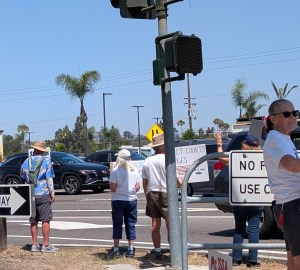
 For centuries, people have used strikes to call attention to wages, working conditions, and so on. Many of these strikes have been successful, too, and one can argue that they are part of the reason for paid time off, salary increases, health care, a 40-hour work week, and more. It’s not easy to go on strike. Strikes take a financial toll, and they’re fraught with tension that can sometimes boil over. But they’ve arguably brought about a lot of positive change. And with the tension and charged atmosphere that strikes bring, it’s no wonder we see them in crime fiction.
You wouldn’t ordinarily think of John Steinbeck’s The Grapes of Wrath as a crime novel. But there are certainly crimes committed in it. When the Great Depression forces Tom Joad and his family to leave Oklahoma for California, they’re desperately hoping they can find a decent place to live and work for the family members who can take jobs. Much of the work for itinerants like the Joads is agricultural, and the working conditions are generally terrible. So, several of the workers decide to strike. In fact, the Joads are hired as strikebreakers. The next day, Joad’s friend Casy joins the strikers, and things begin to turn violent. There are murders committed, and Tom ends up having to flee. Among many other things, the novel shows how abysmal some living conditions have been, how difficult it’s been to find a reasonable job for a fair wage, and how easily company owners can take advantage of workers.
Reginald Hill’s Underworld takes place a few years after the great UK Miners Strike of 1984, and everyone knows who was on the side of the striking miners and who was not. There is no love lost between the workers and their bosses, and those who were scabs have not been forgiven for that. Against this backdrop of tension, an angry young man called Colin Farr returns to the mining town where his father, Billy, died a few years ago. It’s said he died of suicide after killing a young girl called Tracey Pedley. Another person has confessed, but there are still people who think Billy was responsible. Then, a retired cop decides to publish his memoirs and is planning to include the Pedley case. Now, Colin is even angrier than he was, and it’s not long before matters come to a head. It’ll be a difficult situation for Superintendent Andy Dalziel and Sergeant Peter Pascoe, because of there’s anyone the local miners hate more than the bosses, it’s the police. As the story goes along, we learn about the strike, its impact on the people in the area, and it’s lasting impact on local relationships.
Jonothan Cullinane’s Red Herring takes place in 1951 Auckland, where the dock workers – the ‘wharfies’ – are about to go on strike. During this time, the ‘red scare’ is very real, and many people think the wharfies are communists out to destroy the government and society. There are important economic reasons, too, for which company owners want this dispute settled. Against this backdrop, Auckland PI Johnny Molloy is hired to find Francis ‘Frank’ O’Phelan, AKA Frank O’Flynn, who was supposedly washed overboard and killed. At first, the insurance company had no problem with the claim and paid out. But a picture has surfaced that suggests the man may still be alive. What’s more, he may be in league with the wharfies. So, the insurance company wants Molloy to find O’Phelan/O’Flynn, or find indisputable proof of his death. It’s a very dangerous undertaking, as Molloy will need to interact with the wharfies and with those on the other side of the dispute.
Dana Stabenow’s Killing Grounds features Native Alaskan Kate Shugak, a former district attorney who’s now a PI. She’s spending the summer working on her ‘Uncle’ Sam’s fishing boat, the Freya. Fishing isn’t a lucrative career; many of the local fishermen are on subsistence wages. So, when the price of salmon goes down, the local fishermen decide to go on strike. As you can imagine, this is a tense enough situation. There’s one person, though, who’s not on strike: a local man called Cal Meany. He’s roundly hated as it is, for a few reasons. And when he chooses to be a scab, things only get worse. When his body is discovered, it’s clear that no-one will mourn his absence, and there are plenty of people with a good motive for murder. Kate investigates the murder, but she’ll have to be careful, since more than one person is just as happy to see ‘justice’ done.
One plot thread of Attica Lock’s Black Water Rising (which is set in the Houston of 1981) concerns a planned strike. The International Longshoreman’s Association (ILA) and the Brotherhood of Longshoremen (BoL) are in the process of merging, but it hasn’t happened yet. So, for the moment, they’re separate unions, each planning to strike. Matters are tense, though. The BoL is Black, whereas the ILA is white. At that time, in that place, there are still plenty of people who don’t want any sort of integration. The two groups are going to have to reconcile their differences, though, or the strike they are planning will fall apart. If that happens, neither group will get anything it wants. That will be hard, though, as a group of ILA thugs have recently beaten up a BoL member. Attorney Jay Porter knows Houston’s mayor, so his father-in-law asks him to please use his influence with her to prosecute the men responsible for the attack. That way, the two unions can pick up the pieces and join forces for the strike. It’s going to difficult, as Porter has a history with the mayor. But he agrees. Before he knows it, he’s drawn into not just the unions’ drama, but also a case of murder.
Strikes and striking groups can add a lot to a crime story. There’s the background tension, and the mix of personalities of the people involved. And strikes can lead to violence. Which stories involving strikes have stayed with you?
*NOTE: The title of this post is a line from Alfred Hayes’ poem Joe Hill, which was set to music by Earl Robinson.
 Crime Writer Margot Kinberg
One of the best descriptions of a strike and what it entails is in Upton Sinclair’s King Coal. Steinbeck’s In Dubious Battle is also very good. My last two reads of Hill haven’t been very satisfying but Underworld seems interesting. Thanks Margot, for a different kind of post.
LikeLike
Thanks, Neeru – I’m glad you thought the post was interesting. I appreciate your mentions of both Sinclair and Steinbeck. I’ve read both authors, but not those two particular books; I should put them on my list. And if you try Underworld, I hope you’ll enjoy it. It’s an interesting look at a mining community, among other things.
LikeLike
Really interesting post, Margot, and perhaps the nudge I need to finally read The Grapes of Wrath!!
LikeLike
Thanks, KBR! And I hope that, if you read The Grapes of Wrath, you’ll be glad you did. It’s a powerful read, in my opinion.
LikeLiked by 1 person
What a fascinating topic! I am trying to think of other examples of strikes in crime fiction, but I don’t think David Peace’s Red Riding quartet mentions any except tangentially, and I think it also appears as a background theme in some of George Pelecanos’ novels.
LikeLike
Thank you, Marina Sofia! I’m so glad you found the post interesting. Thanks for mentioning Pelecanos, too. I haven’t read his work in a while, and I would like to see what he’s been doing. I think you’re right, too, that strikes serve as background in some of his stories. I need to check that out.
LikeLike
Interesting piece, Margot. I don’t know much about strikes in the USA, but we have had some nasty ones over the years. So much anger and resentment that still echoes down the decades. I’m thinking of the Miner’s Strike in the 1970s, and various others. Our latest is in Birmingham where the dustbin collections have not been done for 5 months and rubbish is blocking streets and pavements in the city. The government won’t step in – the unions keep them in power in the UK, so the poor people of Birmingham have the heat of the summer, the stench, and the vermin are as large as cats. I am sure when it is over and stories are told, there may well be crimes to be revealed. Thanks for this. J x
LikeLike
Thanks for the kind words, Jane. I’m glad you found the post interesting. Strikes really can tap into a lot of resentment, so that even after they’re settled, the bad feeling remains. The strike in Birmingham sounds awful, and it’s a reminder that strikes impact everyone, not just a company and its striking employees. I hope that strike ends soon. And you make a point about hidden crimes. Strikes can hide those, too.
LikeLiked by 1 person
The mining community in the North of England has never got over the 1970s strikes and Margaret Thatcher’s clamp down. Those who broke the strike (known as scabs) were shunned and are still treated as lepers by the communities. It all runs so deep. Such anger and hatred remains, even today. The role of the police has never been forgiven. Undercover officers infiltrated the miners. You can just imagine the types of crime that could result.
LikeLike
The scars and wounds are definitely still there, Jane. I can well imagine the resentment against the police, to say nothing of the scabs. For the miners, those things were unforgivable betrayals. It’s very believable that there would still be such anger even after all this time.
LikeLiked by 1 person
Yes, indeed. Your piece resonated with me. Thanks. Have a fab weekend x
LikeLike
I hope your weekend goes well, too, Jane! x
LikeLiked by 1 person
Thanks, so much, No doubt hubster will have his straw sun hat on in the temperatures we are expecting.
LikeLike
Probably a wise idea, Jane! x
LikeLiked by 1 person
Running late – tennis! But I can’t resist adding Menna Gallie’s Strike for a Kingdom, set in the Welsh valleys during the big miners’ strike of 1926. While it’s mostly about the lives of the miners and their families, there is a murder mystery, when the body of the mine manager turns up dead…
LikeLike
Ooooh, that is a great addition, FictionFan. I remember adding this to the wish list (and soon, I daresay, to the TBR) after I read your excellent review of it. Folks, do check out that review. The book’s a perfect example of what I had in mind with this post, so thanks. And now, go back to enjoying the tennis!
LikeLiked by 1 person
Thanks as always for the link! I hope you enjoy Strike for a Kingdom if you get to it sometime!
LikeLike
I’m sure I will, FictionFan!
LikeLike