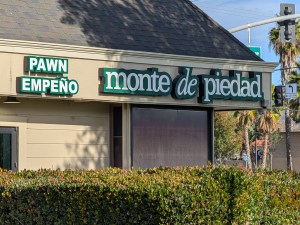
 There are several professions that we might look down on, or not consider ‘respectable,’ whatever that means. And yet, people turn to members of those professions when they’re needed. It’s an odd blend of contempt with an acknowledgement that those professions are needed. We certainly see it in real life (you might walk by a pawn shop and feel bad for the people who work there but still go to such a shop if you’re desperate). It’s there in crime fiction, too, and that sort of professional class system can play out in an interesting way.
In Agatha Christie’s The Hollow, for instance, Hercule Poirot is invited for a weekend lunch at the country home of Sir Henry and Lady Lucy Angkatell. Instead of a pleasant meal, he’s drawn into a case of murder. He arrives at the home, only to find that someone has shot Dr. John Christow, who was a houseguest of the Angkatells. Inspector Grange is called in, and he and Poirot work to find out who the killer is. Naturally, the police interview the servants, including a kitchen maid called Doris Emmott. She gives the police some useful information, but instead of gratitude, she’s called on the carpet by the butler, the housekeeper, and the cook. The butler, Gudgeon, tells Doris:
‘Never get mixed up with the police more than you can help. It’s painful enough having them in the house at all.’
Mrs. Medway, the cook, says:
‘It’s common to be mixed up with the police, and don’t you forget it.’
It’s understood that the police might be called in to investigate a murder. But it’s not considered respectable to involved with them.
We see the same attitude in Anne Perry’s Victorian-Era novel, The Face of a Stranger. William Monk is a London police detective. One day, he wakes up in a hospital with no memory of who he is or why he’s there. He’s been in a terrible accident but doesn’t remember any details about it. Gradually, as he heals, he starts to remember who he is, although the details are still awfully hazy. When he’s ready to return to work, he’s asked to look into the murder of a ‘blueblood’ called Joscelin Grey. There aren’t very many clues, so Monk has little to go on as he gets started. As you can imagine, he wants to talk to the members of Grey’s family, but that’s not going to be easy. The Grey family is of very high social status and wants nothing to do with the police. It’s considered disreputable to have contact with officers of the law. Grey’s mother, who is the family matriarch, is particularly upset that the police are talking to her family and even visit her own home. It’s an interesting look at the way the police are regarded at the time; ‘proper’ people simply don’t have contact with the police, but they call the police in when there’s a crime.
The escort and sex worker professions also have a history of being considered disreputable at the same time as they are considered necessary. There are many, many crime stories that focus on those professions; I’ll just make note of one. In Jill Edmondson’s Dead Light District, Toronto-based PI Sasha Jackson gets a new client. A brothel owner called Candace Curtis hires Sasha to trace one of her employees, Mary Carmen Santamaria, who’s gone missing. At one point, Sasha is getting background information on Candace’s business and on Mary Carmen. Here’s a bit of the conversation she has with Candace:
‘‘You have a database of hookers?’… [Sasha]
‘Please, don’t call them hookers. Most of the girls use the term intimacy consultant, though some call themselves relaxation therapists. I know they’re euphemisms, but they’re important to the girls’ self esteem.’
‘Consultants. Right. Got it.’’
Through that conversation, Sasha starts thinking about her own assumptions about sex workers. Perhaps people look down on the profession, but they still visit sex workers and even depend on them. Candace wants to ensure that her employees have a sense of dignity about what they do.
Leigh Redhead’s Simone Kirsch novels also explore this. Simone’s a Melbourne-based former stripper who’s trying to make it as a PI. As she gets involved in cases, she works with escorts, sex workers and other strippers, and we get a background on the Melbourne sex industry. Many of these people do see what they do as an important industry, and certainly a popular one, even though there are people who might look down on them.
Pawn shop owners and moneylenders have also sometimes been considered disreputable. Anyone who went to one was clearly in an embarrassing situation, and so the owners must be, well, ‘not one of us.’ And yet, plenty of people have gone to (still go to) pawn shops. They serve a need, although some despise them. For instance, in Aaron Elkins’ Loot, we are introduced to Benjamin ‘Ben’ Revere, a Boston-based art historian and expert. One day, he gets a call from a friend, Simeon Pawlovski, who owns a pawn shop. Pawlovski has just gotten a new painting into his shop, and he wants Ben to determine its value. Ben agrees and goes to the shop. To his shock, he finds that the painting is likely a priceless Velázquez that was ‘taken for safekeeping’ by the Nazis during WW II. He wants to go and do some further research on the topic and promises Pawlovski he’ll bring the painting back within two hours. Pawlovski refuses to let the painting leave his shop, so Ben goes off without it. When he returns, he finds Pawlovski’s been murdered. He feels guilty about leaving his friend in a vulnerable situation, and he wants to find out what happened. So, while the police look for clues and evidence, Ben decides to trace the painting and see if he can find out who the killer is that way. The search leads him to Europe and into the sights of some very dangerous people.
There’s also Ernesto Mallo’s Needle in a Haystack, which takes place in 1970s Buenos Aires, a very dangerous time to be in that city. Venancio ‘Perro’ Lescano is a police officer, which means he has to help keep the peace while at the same time not angering anyone in authority. One day he’s sent to a riverbank where two bodies have been dumped. They’ve been shot in the typical ‘army’ way, and Lescano is expected to ‘rubber stamp’ the official explanation. But there’s a third body, too, and that body was not murdered in the same way. So, very quietly, Lescano decides to ask some questions. It turns out that the victim is Elías Biterman, a successful moneylender and pawnbroker. On the one hand, people don’t want their names associated with that business. On the other, plenty of very important people did business with Biterman, and don’t want anyone knowing it. That’s part of what makes this investigation very difficult for Lescano.
And that’s the thing about some professions. People might consider them disreputable, and even look down on them. But those same people know how necessary they are. These are just a few examples. Your turn.
*NOTE: The title of this post is a line from Bob Stone’s Gypsies, Tramps and Thieves.
 Crime Writer Margot Kinberg
Witches often turn up in historical fiction as that kind of profession – they’re looked down on, even persecuted, but people still turn to them for help if there’s a sickness or bad fortune of some kind.
LikeLike
You know, you’re right, FictionFan. Witches have often been in that position. People sought them out, but at the same time, reviled them or worse. I’m glad you brought that up. As a matter of fact, there’s lots on witches out there; I should do a separate post on that…
LikeLiked by 1 person
Such an interesting topic, Margot, and these stories and plots really reflect the double standards in society – ones that have existed in the past and still do!
LikeLike
Thanks, KBR. And double standard is exactly what it is – well said! Some people and businesses are still considered disreputable – until we need them for something!
LikeLiked by 1 person
In this 21st Century some professions are less disreputable. Gail Bowen’s long running sleuth, Joanne Kilbourn Shreve, in the most recent book, The Solitary Friend, has respect for an escort service in Regina and befriends a woman who ceases being an escort and becomes the wife of a good friend.
LikeLike
You’re quite right, Bill. There have been changes in the way people view certain professions, and I’m glad you mentioned The Solitary Friend Gail Bowen is so talented; she’s portrayed a lot of changes over time in a way that gives us a look at those changes. Folks, do read Bill’s fine review of The Solitary Friend.
LikeLike