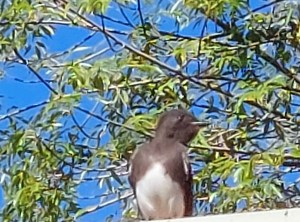
 Have you ever found that, when your nerves are jangled, a walk outside can be just the thing? There’s research evidence that supports the belief that nature is healing, and that it’s extremely important to our well-being. Some people have a deep understanding of the link between humans and nature, and that impacts their perspective. Both in real life and in crime fiction, those who understand nature can be at a real advantage.
For instance, Arthur Upfield’s Inspector Napoleon ‘Bony’ Bonaparte works with the Queensland Police. He is half white/half Aborigine, and was brought up to, as he puts it, read the ‘book of the bush.’ He is thoroughly familiar with the way nature works, and that often helps him solve cases. It’s not just a matter of noticing footprints, either. He understands weather patterns, animals, the way plants grow, and so on. And that gives him a real advantage when he’s trying to find someone. It also gives him an advantage when he’s in a risky situation. I know, fans of Tony Hillerman’s Jim Chee. He, too, knows how to track, how to make sense of the clues nature gives him, and so on.
Craig Johnson’s Sheriff Walt Longmire lives and works in fictional Absaroka County, Wyoming. He’s responsible for a lot of sometimes unforgiving terrain. And things get even more challenging during winter. So he’s learned to have a lot of respect for nature. He understands weather patterns, and he knows the sorts of places that are safe if one’s caught outside during a storm. He knows the sorts of animals that live in the area, too, and which ones are (and aren’t) harmful. Because Absaroka County is rural, there’s sometimes a long distance between the places Longmire goes. And he’s got a real understanding of the risks one takes outdoors. So, he’s usually prepared, and he knows how to take care of himself if he is caught unawares.
You could say a similar thing about Nevada Barr’s Anna Pigeon. She is a Park Ranger for the National Park Service and spends plenty of time outdoors. She’s worked in a variety of climates, too, from near-desert to rainy to near-arctic. So, she’s learned how to make sense of the nature that surrounds her. She finds it soothing, too, as she does get her fill of people. She’s well-versed in the plants, animals, and weather patterns in the places she works, and that helps her both stay safe and work to keep park visitors safe. She notices when things are amiss, too, and that sometimes gives her clues as she’s solving a mystery.
M.J. McGrath has written three books featuring Edie Kiglatuk. She’s a hunting guide who lives and works in Canada’s Far North. The climate there is harsh, and sometimes deadly, so Edie’s clients depend on her understanding of how nature works there. People sometimes spend a few days hunting, fishing and trapping, so a good campsite is essential, and so is a knowledgeable guide. Edie’s the best, too. She knows what provisions to bring, where the animals are, how to find shelter, and how to track. You have a good point, fans of Scott Young’s Matthew ‘Matteesie’ Kitologitok. He’s a member of the RCMP who has a home in Ottawa, but spends most of his time in the Far North. He knows how to hunt, track, find animals and people, and get nutrition. For people who live in harsh climates like that, the connection between humans and nature can mean the difference between life and death.
There’s also Mike Martin’s Winston Windflower, who lives and works in Newfoundland and Labrador. He’s a member of the RCMP, so his job is sometimes draining, both physically and mentally. He’s very much attached to nature, and when he needs a break, he takes time to hike into the woods or visit the water, just to connect with the animals, the trees, and the other plants. He takes his two daughters with him sometimes, and they, too, are learning about the local plants, birds, and trees. He is First Nations Cree, so he also uses his time in nature for healing and other rituals. His connection to nature helps him in his job, too. He has a good sense of when the ever-present fog will make driving difficult. He knows the signs of oncoming bad weather, too, and he can allocate police and other support as needed. He’s the sort of sleuth you couldn’t imagine being happy living in a big city, separated from nature.
And he’s not alone. There are people who really are at one with nature. They understand its rhythms, they respect its power, and they benefit from spending time outdoors. I’ve only had space for a few examples here. I’m sure you can think of more than I could.
*NOTE: The title of this post is a line from Harold Adamson , Jan Savitt, and John Watson’s What a Wonderful World.
 Crime Writer Margot Kinberg
Margot: You have some fine examples of “sleuths” one with nature. Butler, Helen Thorpe, is not a conventional “one with nature”. In A Meditation on Murder by Susan Juby she takes spoiled billionaire daughter Cartier Hightower, who is caught up in the world of influencers, to central B.C. to a ranch. With no electronics around Helen starts helping Cartier learn to be a “proper rich lady”. It is a modern day example of returning to nature.
LikeLike
Oh, that sounds like such an interesting premise for a story, Bill! As I think about it, I can only imagine how difficult it would be for today’s young people to be without any electronics. That’s even more so for those caught up (or involved) in the world of influencers. With both Helen Thorpe and her niece not overly tuned in to nature, I’m sure all sorts of things happen in the course of the book.
LikeLike
Really interesting post, Margot, and all of those authors are new to me so thank you. Certainly country and city detecting can be very different – even our old classics like Holmes and Poirot behave differently in the country (although I don’t think Poirot was very fond of it!)
LikeLike
You really make a good point, KBR, about the differences between city and country sorts of detectives. They really are different, aren’t they? And the sleuths seem to adapt to the sort of environment they’re in, which does make sense. If you get to these authors, I hope you’ll enjoy them! And thanks for the kind words!
LikeLiked by 1 person
As a city girl, I’d be hopeless at surviving in any kind of wilderness. We don’t have quite so many fictional detectives with those kind of skills of the natural environment, probably because we’re such a small country you’re never really very far from the nearest town, or at least village. Maybe detectives working in the islands are our equivalent, like Ann Cleeves’ Shetland series, where knowledge of weather and nature becomes more important.
LikeLike
I think it’s really interesting, FictionFan, how geography impacts the sort of fictional detectives one sees. It makes sense, of course, but I hadn’t thought a great deal about it until I started putting this post together. You make a really well-taken point, too, that, in a country with fewer truly wild places, you’d have fewer fictional detectives with those survival skills. The Shetlands are different, so it makes sense that sleuths like Ann Cleeves’ would need to have some of those skills. Interesting ‘food for thought,’ so thanks. Oh, and I’d be pretty hopeless in the wilderness, too…
LikeLiked by 1 person
I have read books by all of these authors except for Mike Martin. I do have his first book on the Kindle and I should get around to reading it soon. I like to read about Newfoundland and Labrador.
LikeLike
I really think you’d like Mike Martin’s series, Tracy. He tells a good story, and the Newfoundland and Labrador setting is very effective. If you do try his work, I hope you’ll enjoy it.
LikeLike